The Lancaster University Nuclear Operations Simulator. (Photo: Lancaster University)
Lancaster University in England is the home of an unusual nuclear power simulator that can be used for both fusion and fission education.
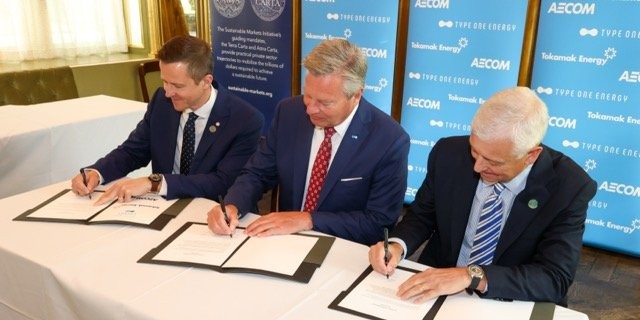
Representatives of Tokamak Energy, Type One Energy, and AECOM sign an agreement establishing the U.K. Infinity Fusion Consortium. (Photo: Type One Energy)
Three companies have come together to form the U.K. Infinity Fusion Consortium with the objective of developing the first private sector–led fusion power plant in the United Kingdom using existing “commercially credible” technologies.
The consortium is expected to benefit from the combination of the three partners’ expertise. Tennessee-based fusion start-up Type One Energy brings its 400-MWe Infinity Two stellarator fusion power plant design. British fusion technology company Tokamak Energy has its HTS magnet technology and manufacturing background. Texas-based consulting firm AECOM has international engineering and infrastructure capabilities.
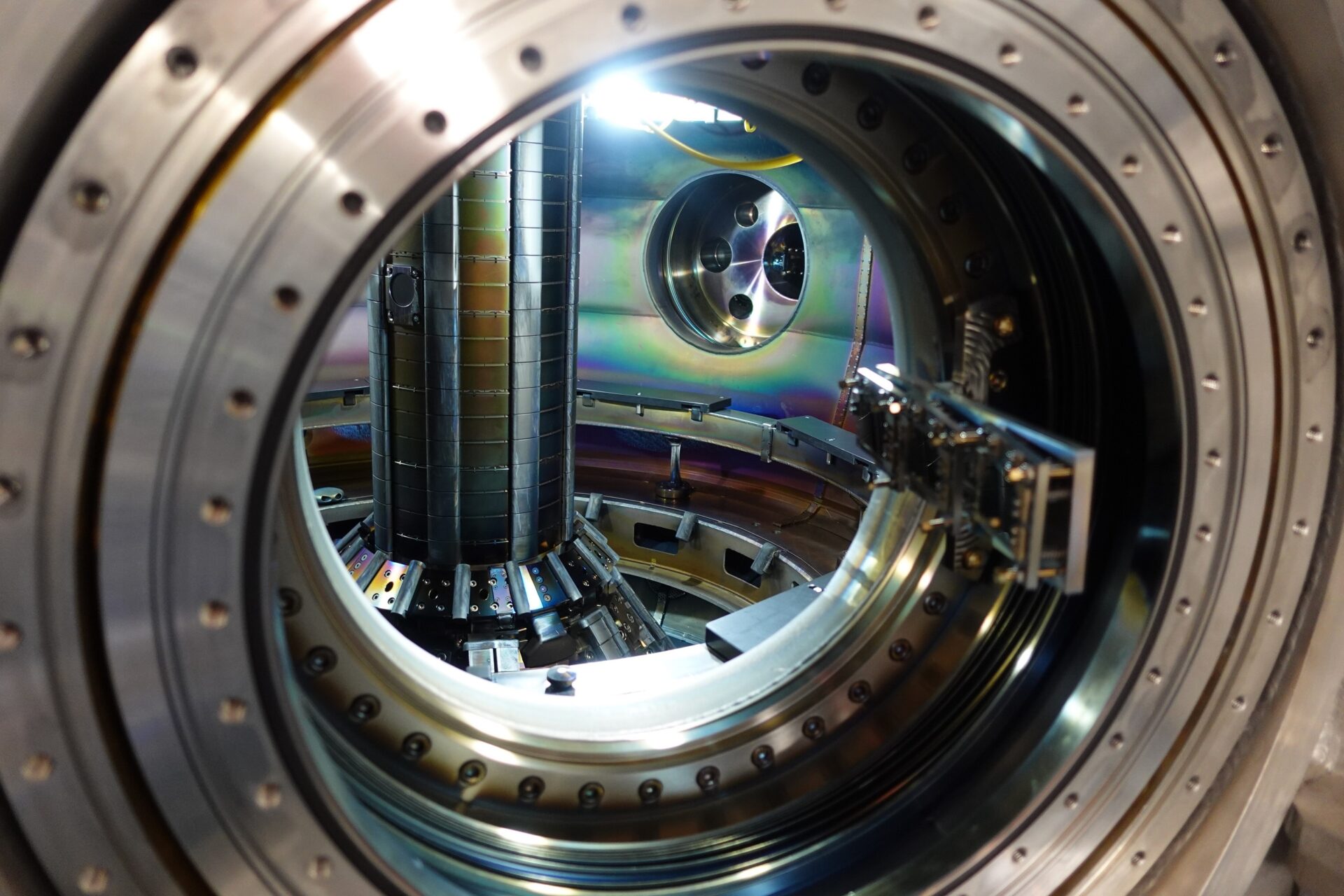
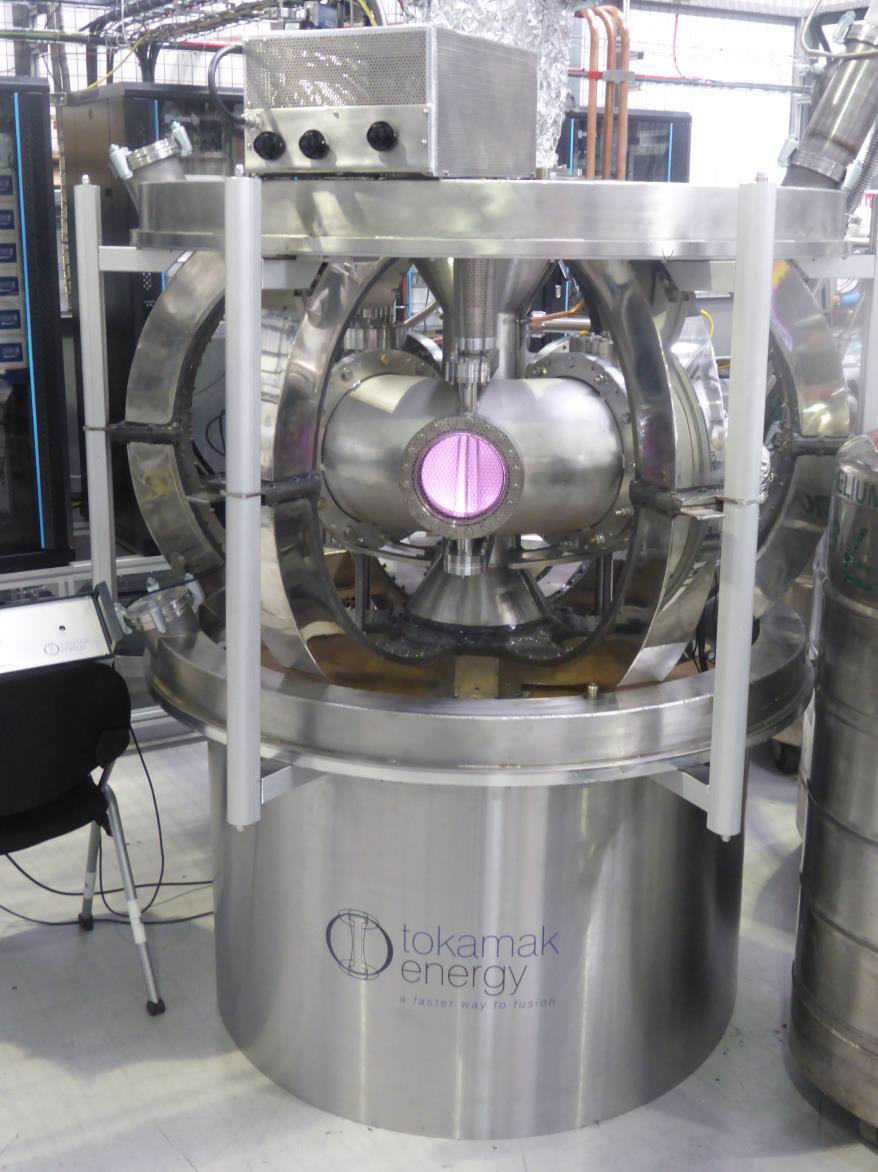
Tokamak Energy’s ST40. (Photo: Tokamak Energy)
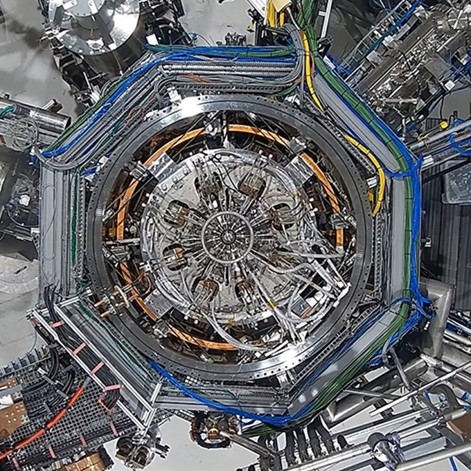
Tokamak Energy’s ST40 experimental fusion facility will receive a $52 million upgrade under a joint public-private effort with the U.S. Department of Energy and the U.K. Department of Energy Security and Net Zero (DESNZ) aimed at advancing the fusion science and technology needed to deliver a future pilot plant.
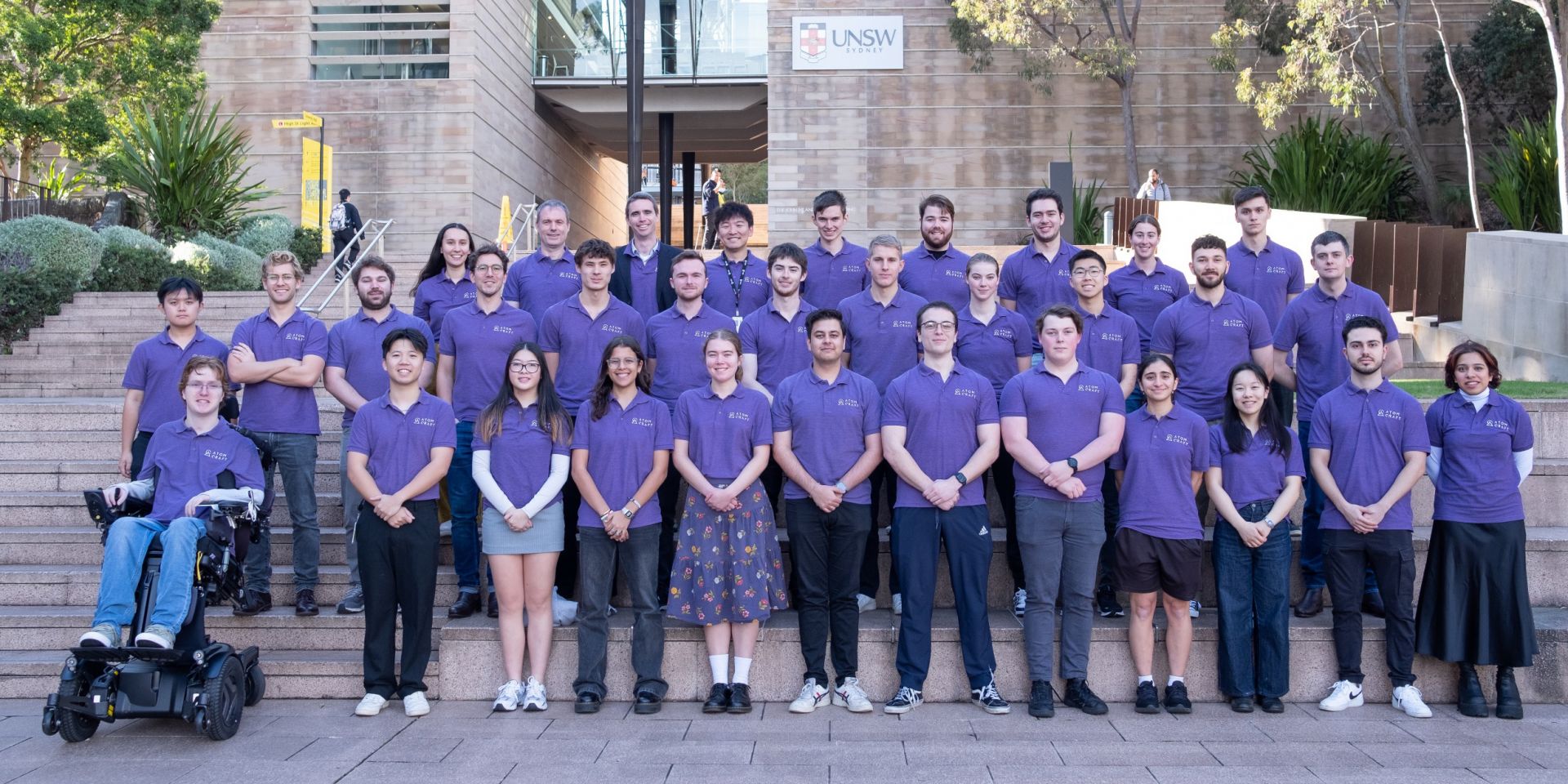
The cross-disciplinary AtomCraft team. (Photo: University of New South Wales)
Commercial nuclear power is illegal in Australia, and it has been since the 1990s. This past June, however, the country’s main opposition party announced plans to build seven commercial nuclear reactors in the 2030s and 2040s on sites presently occupied by aging coal-fired plants—should the party’s Liberal–National Coalition win power in federal elections next year. This statement has reignited a public debate regarding the potential role of nuclear energy in Australia.
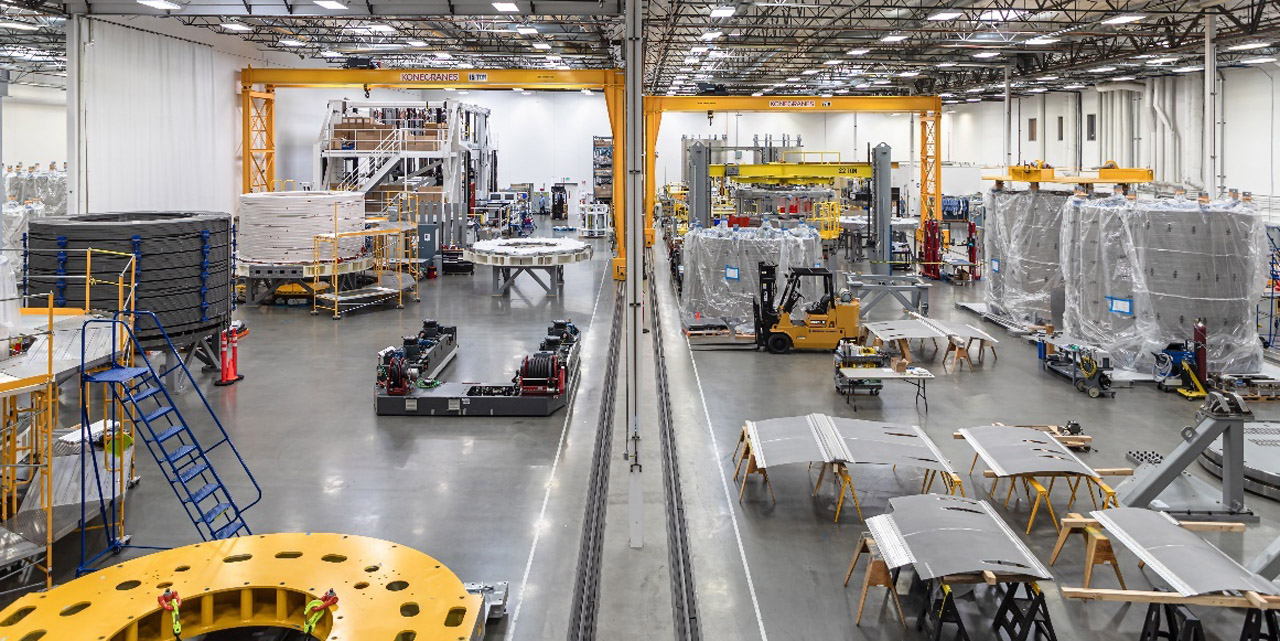
GA’s Magnet Technologies Center. (Photo: GA)
General Atomics (GA) and Tokamak Energy Ltd. are each independently developing magnetic confinement fusion power plant concepts that would use a tokamak and high-temperature superconducting (HTS) magnets to confine and shape a plasma heated to over 100 million degrees Celsius. On May 30, they announced a memorandum of understanding to collaborate on HTS magnet technology for fusion energy and other applications.
Tokamak Energy's high-temperature superconducting (HTS) tape is used in its HTS magnets. (Photo: Tokamak Energy)
Tokamak Energy announced on February 6 that it has built a world-first set of high-temperature superconducting (HTS) magnets, to be assembled and tested in fusion power plant–relevant scenarios.